You may have noticed a drop in internet traffic since the end of February. What might have caused this? Has Google updated its algorithm? Have you received a Google penalty? Will you need to get your web designer or SEO specialist to look into the problem? Or is it something a lot more evident than staring you in the face?

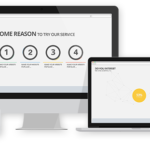
Google review before change

Google review after change
It’s possible you hadn’t noticed that your Google local listing review visibility got much more visible. It might have escaped your attention, but did it escape the attention of your prospects? Until late last month, the star rating system for listings only showed your star rating out of 5, a maximum of 5 stars if you already had a minimum of five reviews. This made poorly reviewed companies relatively insulated from a poor review profile. Before the change, the first image had four five-star reviews but could have easily hidden four damaging numbers of poor reviews. After the change, as in the second image, it’s clear whether a company has good or bad reviews, even if it’s only one review. The change makes poor reviews much more visible and potentially more damaging. Mainly, if you happen to have had one poor Google review from one particularly aggrieved customer, and let’s face it, it’s fair to say that generally, the most motived reviewers are those who feel considerably negatively towards you.
Many business owners can get obsessed with their website’s performance or, for that matter, the social platforms they also have under control. Still, your Google local listing can be more important than any of these platforms. Why? Because it often gets seen first. Why? Unless your prospect was searching for you, then there’s a good chance they’ll see on a Google search, which is, after Adwords, a local listing before the organic listings that most companies get hung up about.
Of course, you could argue that a bad review might harm people searching for my services, but most of my work comes from referrals. Well, in that case, it’s still a problem. If they’re on the web and they don’t know your web address, then they’ll search for you by company name. In this case, they’ll see your company listing on Google on the right-hand side, and guess what? That bad Google review will be following you around in your prospect’s faces before they choose to proceed, or not to proceed, to your website.
However, you may be in a position where you don’t have any reviews—nothing good or bad. This sounds OK, but of course, this leaves you just one heartbeat from a bad review. Might it be a great time to start harvesting lots of positive reviews from your clients? On the other hand, you may have several good reviews. It’s a safer position to be in, but again, you’re still open to several bad reviews spoiling that. So what’s the answer?
The answer is to have an ongoing campaign of seeking to maximise the goodwill that comes to your, or for that matter, your staff, every day. Don’t wait for someone to leave; it may be a good, bad, or less likely indifferent review. Instead, leap upon all the positivity that is generated. If someone is singing your praises, provide them with the opportunity to leave a review as straightforwardly as possible.
The great thing about harvesting all the positive feedback you receive is not just simply the way to demonstrate and promote your company or to head off any negative reviews coming your way. It also allows you the chance to create a virtuous circle. You can respond to every review created, regardless of whether it is good or bad. For good reviews, you can explain how you ensure an excellent service in a particular instance. For bad reviews, it gives you the chance to show you care and how you may wish to redress any issues the client has. From this perspective, there is no bad thing as a bad review, but a person browsing your profile may not drill down to see your response and take the negative review at face value. This will largely depend on the scale of bad reviews.
To learn more about Ready Steady Go SEO services, visit our reputation management or local SEO pages.